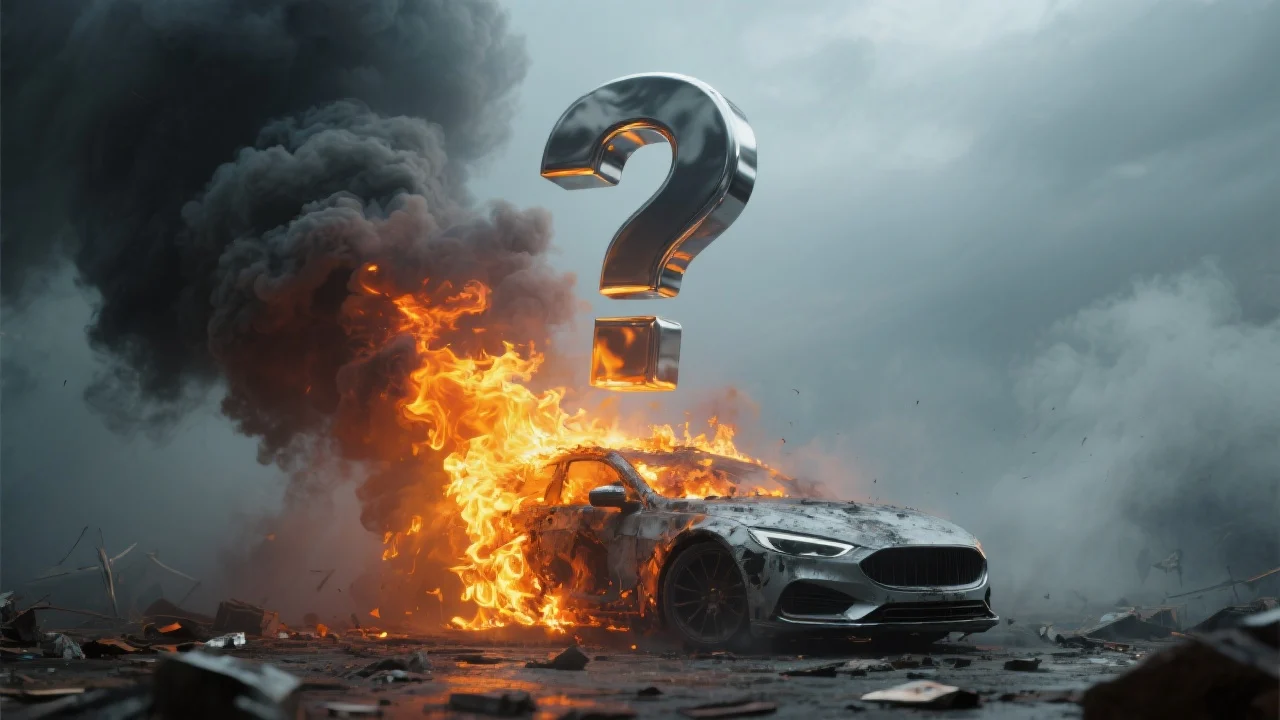
Knock on wood (and whatever you believe in) forbid that an EV fire ever happens in our country. However, simple math, statistics, and probability suggest that as EV sales increase, so does the likelihood that one may eventually catch fire. Hopefully, that never happens. But for the record, as of this posting, no EV has ever caught fire in the Philippines.
So why, whenever a car is on fire, do videos of the incident or online comments immediately assume it’s an EV, even when it’s not?
We can all speculate about why this assumption exists. However, it is undeniable that EV fires are among the most difficult, if not nearly impossible, to extinguish. Why is this?
Why Are EV Fires Difficult to Extinguish?
- Thermal Runaway: Overheating of a single battery cell can trigger a chain reaction, causing adjacent cells to ignite and sustain the fire.
- High Energy Density: EV batteries store significant energy in compact spaces, resulting in prolonged and intense fires when ignited.
- Reignition Risk: Even after being extinguished, residual heat within the cells can cause reignition hours or even days later.
- Water Requirements: Extinguishing an EV fire often requires massive amounts of water (sometimes exceeding 10,000 gallons) to cool the batteries effectively.
- Chemical Reactions: Flammable electrolytes and the release of toxic gases make EV fires difficult to suppress using standard firefighting methods, often requiring specialized suppression techniques.
Are EVs More Prone to Fire?
The short answer: No.
Why?
- Battery Longevity: EV batteries are designed to last for decades, enduring thousands of charge cycles before significant degradation occurs.
- Minimal Modifications: Unlike ICE vehicles, EVs do not require or encourage aftermarket modifications, reducing the risk of unsafe alterations.
- Lower Maintenance Needs: EVs have fewer moving parts and virtually no required preventive maintenance for their battery, motor, or inverter. This eliminates risks related to incorrect maintenance, botched repairs, and fuel leaks—common causes of ICE vehicle fires.
EV vs. ICE Fire Statistics
As referenced in my previous article, “NAIA T3 Indoor Parking Now Allows EVs,” fully electric vehicles have the lowest risk of catching fire simply because they do not use combustible fuel.
Fire incident rates:
- EVs: 40 fires per 100,000 vehicles
- ICE vehicles: 1,500 to 2,000 fires per 100,000 vehicles
Additionally, ICE vehicles are more prone to fire risks due to their fuel systems and higher maintenance demands.
For further reading, check out these sources:
https://www.blazestack.com/blog/how-many-ev-fires-in-2023-2024
https://www.motortrend.com/features/you-are-wrong-about-ev-fires
https://www.wired.com/story/the-auto-industry-finally-has-a-plan-to-stop-electric-vehicle-fires
Are EVs Safer?
Yes. A car that is on fire is never a laughing matter, whether it involves an EV or an ICE vehicle. But once a car burns, it is considered a total loss anyway. This is not a battle of good vs. evil or which one is better? An ICE or an EV?—this article simply aims to correct the misconception that EVs are more prone to fire.
That’s why the next time you see a burning car, don’t immediately assume it’s an EV. Statistically, the chances of it being an EV are the lowest. Instead, our primary concern should be the safety of the vehicle’s occupants and those in the surrounding area. The focus should be on alerting the community about the incident and avoiding the danger zone.
Whether EV fires are harder to extinguish versus being more prone to fire is another topic that I have yet to discuss about. But for now, one key takeaway: if a car is on fire, don’t automatically assume it’s an EV.