
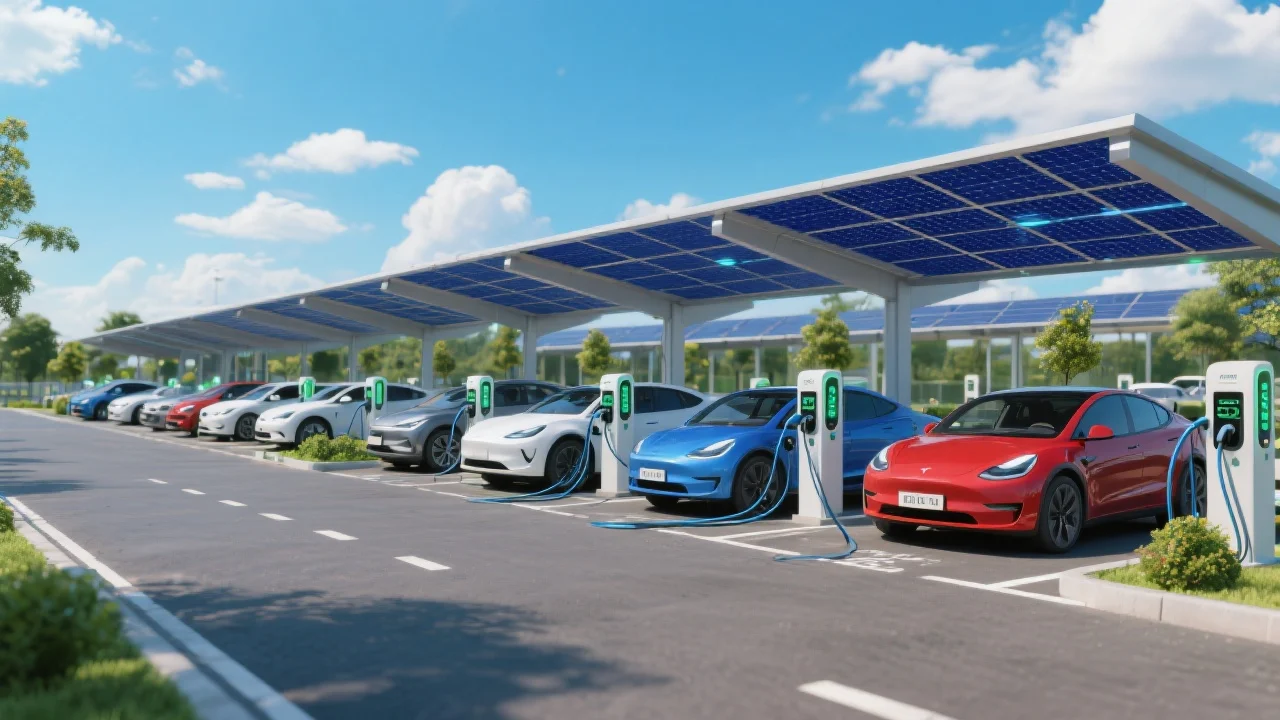
Electric Vehicle Charging Stations (EVCS), as they are called, are dedicated charging stations (not parking stations) for the use of BEVs and PHEVs. Electric vehicles, especially full EVs (BEVs), rely solely on energy stored in their batteries. It’s important to maintain a sufficiently charged EV, as charging takes time.
There are different levels of chargers for EVs:
- Level 1 Charger refers to the slowest and most basic form of charging, typically using a standard household wall outlet. It can be either a fixed charger with a cable or a portable charger that comes with the EV. Level 1 chargers provide less than 2 kW of power.
- Level 2 Charger is typically a mounted charger found in public charging stations, such as at malls, providing between 7 to 22 kW of power.
- Level 3 Charger, also known as DC Fast Charging, is the fastest type of charger. Unlike Level 1 and Level 2 chargers, which use alternating current (AC), Level 3 chargers provide direct current (DC) with a minimum power output of 40 kW. In the country we can currently find DC chargers that can provide up to 150kW that can only take minutes to fully charge an EV depending on the state of charge of an EV.
Level 2 chargers are most commonly found in public charging stations and residential setups, providing ample power to an EV.
All public charging stations are privately owned. While it’s up to the private property owner and/or operator to set the rules for their EVCS, globally, EV owners are expected to vacate the charging slot once charging is complete so others may use the station, ensuring the EVCS remains fully utilized. This is especially important at paid charging stations.
Setting up charging stations requires investments from private entities, and if an EVCS remains underutilized due to charging spots being used for parking, the involved parties may lose revenue. At the same time, this is both a responsibility and a courtesy to others. Discourteous behavior should not be encouraged.
For example, AC Mobility, which operates the largest charging network in the country, charges a minimum fee of Php500 after 30 minutes. Charging stations will eventually start charging fees to recoup their investments, and there is no such thing as free charging forever unless the operator or private property owner specifies otherwise.
What about those who have to circle back just to find a new parking slot in an already full parking facility? That’s not anyone else’s problem—it’s a responsibility. Plain and simple.
In fact, no charging operator designates their facility as a parking spot. The only exceptions I know of are those located inside private office buildings, where enforcement and policies regarding charging stations are entirely up to them.
Lastly, this behavior fosters a culture of tolerating charging station hogging. Remember when AC Mobility charging used to be free? When they introduced fees, some EV owners initially tried to bypass the overstaying fee by disconnecting the charging cable. However, AcMobility can detect this—and no, I won’t reveal how. But since then, no owner has been able to hog their charging stations.
In fact, AC Mobility even provides a 30-minute grace period. Try doing this at a Tesla Supercharger, especially a high-speed one—you’ll be charged by the minute. Tesla even tracks your starting and ending charge percentage as a basis for billing.
This will be interesting once all operators have fees already. Until then, don’t abuse it especially if it’s free. Don’t charge if you don’t wanna deal with it. And charge at home.